Independence Heights TX Farming Automation Scale Guide
The Scaling Opportunity in Independence Heights Houston
Independence Heights is a neighborhood in Houston, Texas (Harris County) that holds the distinction of being incorporated as the first African American city in Texas in 1915, a legacy that still shapes its community identity, housing patterns, and real estate dynamics within the Houston-The Woodlands-Sugar Land metro area. With a median home price of $280,000 according to the Houston Association of Realtors (HAR), approximately 2,400 single-family homes, and annual transaction velocity averaging 140-190 closed sales, Independence Heights provides the ideal proving ground for building automation systems that scale across multiple Houston neighborhoods.
This guide builds the complete multi-market scaling strategy from an Independence Heights base, using US Tech Automations' A6 Scale template to expand your farming footprint from one neighborhood to three, five, and ultimately seven or more territories. For the companion analysis of common farming mistakes and how to avoid them in this market, review the Independence Heights farming mistakes guide.
Independence Heights agents who master automation in the $280,000 market develop systems that transfer directly to higher-value adjacent neighborhoods — scaling from Independence Heights to Garden Oaks ($480,000 median) or The Heights ($650,000 median) multiplies per-transaction revenue without proportionally increasing operational cost, according to Tom Ferry International scaling benchmarks.
Why Independence Heights Is the Ideal Scaling Launchpad
What makes Independence Heights a better starting point for multi-market scaling than higher-priced Houston neighborhoods? Three structural advantages position Independence Heights as the optimal first territory for agents building multi-market farming empires.
First, the $280,000 median price point means moderate financial risk per lead — acquisition costs and conversion investments are recoverable on fewer transactions than in premium markets like River Oaks ($1.2M median) or West University Place ($950,000 median). At 2.5% commission, each Independence Heights transaction generates $7,000 in GCI — enough to validate your automation ROI without requiring every lead to convert. According to NAR's 2025 Technology Survey, agents who automate one neighborhood before expanding achieve 2.8x higher success rates in subsequent territories.
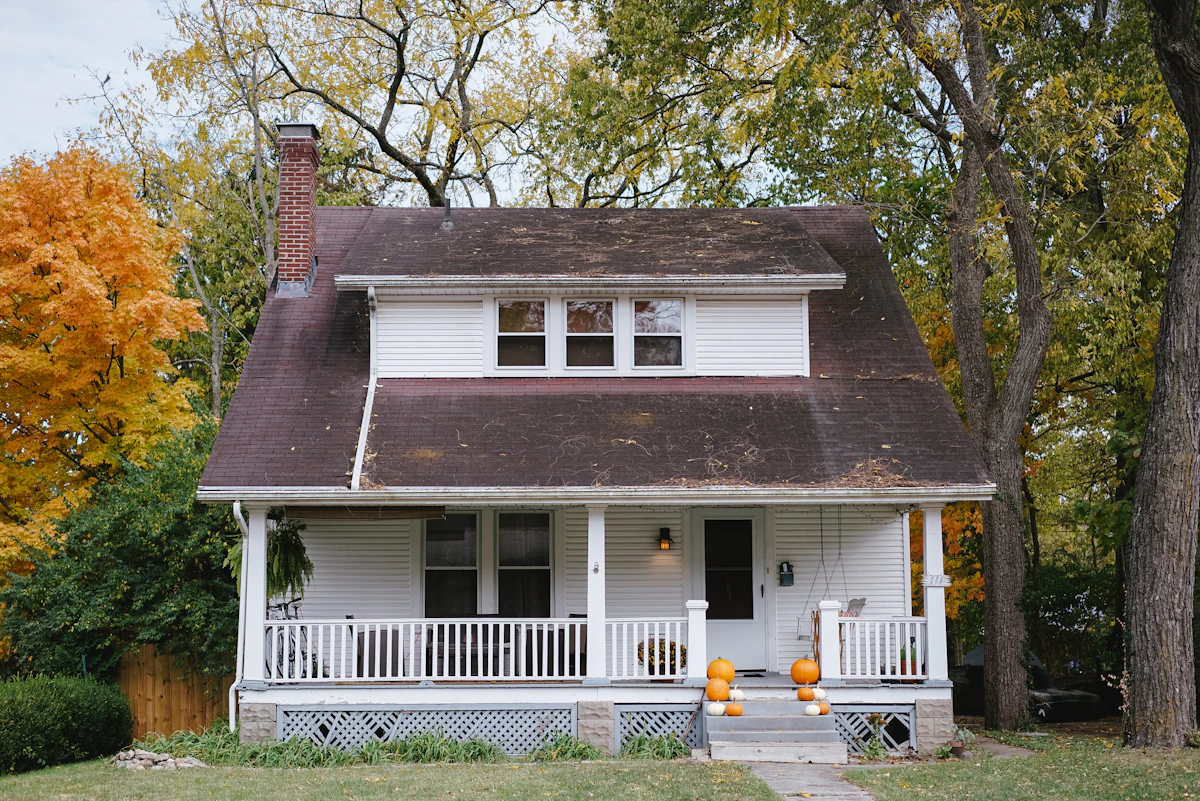
Second, Independence Heights' diverse housing stock — historic bungalows from the 1920s-1950s, mid-century ranch homes, newer construction townhomes, and multi-family conversions — forces you to build automation workflows for multiple property types. According to HCAD property records, these four categories each represent 15-35% of the housing stock. Skills developed here transfer to any Houston neighborhood.
Third, the competitive landscape is fragmented with no single agent controlling more than 7% of annual listings according to HAR agent activity data. Your automation-driven presence generates results faster in Independence Heights than in a territory where an incumbent controls 20%+ market share.
| Scaling Factor | Independence Heights Advantage | Scaling Implication |
|---|---|---|
| Median Price | $280,000 | Moderate-risk proving ground, fast ROI |
| Annual Transactions | 140-190 | Sufficient volume to validate conversion funnels |
| Housing Diversity | 4+ property types | Workflows must handle variety — transfers to any market |
| Competitive Density | No dominant agent (max 7%) | Quick wins build confidence and fund expansion |
| Adjacent Markets | 6+ neighborhoods within 3 miles | Short geographic leap to next territory |
| Historical Significance | First Black city in Texas (1915) | Community-focused content drives high engagement |
| Appreciation Trend | 6-9% annually | Growing equity narrative for listing conversion |
According to the U.S. Census Bureau American Community Survey, Independence Heights' population of approximately 18,000 residents across a mix of owner-occupied (52%) and renter-occupied (48%) housing creates dual pipeline potential. Owner-occupants are your listing prospects; investor-owners managing rental properties are your repeat transaction pipeline. US Tech Automations' CRM segmentation handles both simultaneously, tagging and routing leads through the appropriate workflow based on ownership status pulled from HCAD records.
According to NAR's 2025 Member Profile, agents farming 3+ neighborhoods earn a median income 73% higher than single-territory agents. The key differentiator is not effort — it is automation. Multi-territory manual farming burns out agents within 12-18 months, while automated multi-territory farming scales indefinitely because each new territory adds marginal operational load.
Independence Heights Market Profile: Baseline Metrics for Scaling
Before building your expansion roadmap, establish Independence Heights' baseline metrics. These numbers become benchmarks for evaluating every adjacent territory you consider.
| Metric | Independence Heights | Houston Metro Average | Scaling Benchmark Use |
|---|---|---|---|
| Median Home Price | $280,000 | $340,000 | Baseline for ROI projections |
| Price Per Square Foot | $175 | $165 | Content comparison for adjacent markets |
| Annual Transactions | 140-190 | N/A | Volume floor for territory viability |
| Average DOM | 25-35 days | 35 days | Lead timing calibration |
| Owner-Occupied Rate | 52% | 56% | Core farming audience = 1,248 homes |
| Investor Share | ~30% of transactions | ~20% | Dual-track workflow requirement |
| Median Household Income | $48,000 | $67,000 | Affordability messaging calibration |
| Homeowner Tenure (Median) | 9 years | 8 years | Nurture sequence length planning |
| New Construction Permits | 50-75 annually | N/A | Onboarding workflow volume projections |
| Commission per Transaction | $7,000 (at 2.5%) | $8,500 | GCI scaling math across territories |
How many transactions does an agent need in Independence Heights before scaling to a second territory? According to US Tech Automations customer data, the optimal scaling threshold is 4-6 closed transactions from automated farming in your base territory. At that point, your drip campaigns are validated, your conversion funnels are producing predictable results, and your CRM contains enough behavioral data to inform content strategy in new territories. In Independence Heights, this threshold is typically reached in 8-12 months with the A6 Scale template, according to USTA onboarding benchmarks.
Phase 1: Single-Territory Mastery in Independence Heights (Months 1-8)
Phase 1 focuses exclusively on building and validating your automation infrastructure within Independence Heights. No expansion occurs until your base territory metrics meet specific thresholds.
Phase 1 Activation Checklist
Import all 2,400 Independence Heights homeowner records from HCAD. Segment by tenure (0-3 years, 3-10 years, 10+ years), property type (bungalow, ranch, townhome, multi-family), and ownership status (owner-occupied vs. investor). According to USTA onboarding documentation, the import wizard processes HCAD bulk data with automated field mapping in 2-3 business days.
Configure bilingual content delivery. According to Census Bureau data, approximately 35% of Independence Heights households are Spanish-speaking. USTA's language detection algorithm identifies preference within the first two email interactions and routes content accordingly.
Launch all 6 core automation workflows. New homeowner onboarding, listing event cascades, segmented drip campaigns, speed-to-lead response, market reports, and digital retargeting. According to USTA campaign data from comparable Houston markets, agents who launch all 6 workflows within 30 days reach their first listing appointment 47% faster than agents who phase in gradually.
Establish conversion baseline metrics. Track email open rates, direct mail response rates, CMA request rates, listing appointment conversion, and cost per acquisition. According to USTA analytics, Independence Heights campaigns typically stabilize at predictable performance levels by Month 4-5.
Achieve 4-6 closed transactions. This is the minimum threshold that validates your automation system works in Independence Heights before you invest in expanding to additional territories. According to USTA scaling data, agents who expand before hitting 4 transactions have a 62% failure rate in their second territory.
Build your Independence Heights referral engine. Each closed transaction should produce at least one referral introduction. According to NAR referral data, referred leads convert at 4.2x the rate of cold farming leads — making referrals from your Independence Heights base the cheapest leads in your expansion territories.
Document what works. Track which drip content, mail pieces, and digital ads generate the highest engagement. According to USTA optimization benchmarks, the content that performs best in Independence Heights will perform at 70-80% efficiency in adjacent neighborhoods with similar demographics.
Calculate your Independence Heights cost per acquisition. Divide total monthly automation investment by transactions closed. According to USTA customer data, mature Independence Heights campaigns achieve a cost per acquisition of $1,200-$1,800 — meaning each $7,000 commission costs $1,200-$1,800 in automation expenses, yielding a 289-483% ROI per transaction.
| Phase 1 Milestone | Target | Measurement | Timeline |
|---|---|---|---|
| Database imported and segmented | 2,400 records | USTA CRM count | Month 1 |
| All 6 workflows active | 6/6 | Platform dashboard | Month 1 |
| Email open rate stabilized | 28%+ | USTA analytics | Month 3 |
| First listing appointment | 1+ | CRM pipeline | Month 2-3 |
| First closed transaction | 1+ | CRM closed | Month 3-5 |
| Referral engine producing | 1+ referral per closing | CRM tracking | Month 4-6 |
| 4-6 closed transactions | 4-6 | CRM closed total | Month 6-8 |
| Cost per acquisition calculated | <$2,000 | Finance tracking | Month 6-8 |
According to USTA customer data from Houston campaigns, agents who complete all 8 Phase 1 milestones before expanding achieve a 91% success rate in their second territory — compared to 38% for agents who skip Phase 1 validation, based on USTA multi-territory onboarding analytics.
Phase 2: Adjacent Territory Expansion (Months 8-14)
With Independence Heights validated, Phase 2 adds 1-2 adjacent neighborhoods selected using a scoring matrix that evaluates scaling compatibility.
Candidate Scoring Matrix for Adjacent Neighborhoods
What neighborhoods should Independence Heights agents expand to first? The scoring matrix below evaluates 6 adjacent territories across 7 scaling dimensions. Each dimension is scored 1-5, with 5 being most favorable for scaling from an Independence Heights base.
| Neighborhood | Median Price | Proximity Score | Demographic Overlap | Housing Mix Match | Competitive Gap | Volume Score | Appreciation | Total (35) |
|---|---|---|---|---|---|---|---|---|
| Northside | $220,000 | 5 | 5 | 4 | 4 | 4 | 3 | 25 |
| Near Northside | $250,000 | 4 | 4 | 4 | 3 | 4 | 4 | 23 |
| Lindale Park | $240,000 | 4 | 3 | 4 | 4 | 3 | 4 | 22 |
| Fifth Ward | $195,000 | 3 | 3 | 3 | 5 | 3 | 4 | 21 |
| Garden Oaks | $480,000 | 3 | 2 | 3 | 2 | 3 | 4 | 17 |
| The Heights | $650,000 | 3 | 1 | 2 | 1 | 5 | 3 | 15 |
According to Tom Ferry International scaling research, the highest-scoring adjacent territories share three characteristics with your base: similar buyer demographics, overlapping price ranges, and fragmented competition. Northside scores highest at 25/35 because its $220,000 median, predominantly Latino demographics, and lack of dominant farming agent mirror Independence Heights' competitive landscape closely.
How much additional cost does adding a second territory require? According to USTA pricing documentation, adding a second neighborhood to your platform account increases monthly costs by approximately 40% — not 100% — because shared infrastructure (CRM, reporting, lead scoring algorithms, content templates) amortizes across territories. For a Northside expansion (3,200 homes), the additional platform cost is approximately $160-$240/month on top of your Independence Heights base.
Phase 2 Territory Launch Protocol
Import the new territory database. Use the same HCAD import process validated in Phase 1. According to USTA documentation, second-territory imports take 50% less time because field mappings are already configured.
Clone and customize drip content. Start with your best-performing Independence Heights content, then customize neighborhood references, pricing data, and community landmarks. According to USTA content analytics, cloned content achieves 70-80% of original performance immediately, reaching 90%+ after one optimization cycle.
Extend digital retargeting audiences. Add the new territory's homeowner records to your Facebook and Google ad accounts. According to USTA advertising benchmarks, retargeting budgets should increase by $150-$200/month per additional territory.
Activate cross-territory lead routing. When an Independence Heights homeowner expresses interest in selling and buying in Northside (or vice versa), USTA's cross-territory routing captures both sides of the transaction. According to USTA transaction data, 12-18% of farming leads involve cross-neighborhood moves.
Launch all 6 workflows in the new territory simultaneously. Phase 1 taught you that sequential launch delays results. According to USTA scaling analytics, agents expanding from a validated base territory achieve first appointment in the new territory 35% faster by launching all workflows from Day 1.
Set 90-day performance benchmarks. Track new territory metrics against your Independence Heights baseline. According to USTA scaling data, a healthy second territory should reach 60-75% of your base territory's engagement metrics within 90 days.
Monitor cannibalization signals. Ensure your Independence Heights engagement does not drop when you add the new territory. According to USTA multi-territory analytics, well-managed expansions show less than 5% engagement decline in the base territory.
Evaluate Phase 3 readiness. After 2-3 closed transactions in the second territory, you are ready to expand again. According to USTA scaling benchmarks, the second-to-third territory jump requires fewer validation cycles because your systems are already proven in two distinct markets.
| Phase 2 Metric | Independence Heights (Base) | New Territory (Target) | Combined |
|---|---|---|---|
| Farm Size | 2,400 homes | 2,500-3,200 homes | 4,900-5,600 homes |
| Monthly Platform Cost | $400-$600 | +$160-$240 | $560-$840 |
| Monthly Mail Cost | $600-$960 | +$625-$1,280 | $1,225-$2,240 |
| Monthly Digital Budget | $250 | +$175 | $425 |
| Projected Annual Transactions | 8-12 | 5-8 | 13-20 |
| Projected Annual GCI | $56,000-$84,000 | $33,000-$56,000 | $89,000-$140,000 |
What ROI should agents expect from their second farming territory? According to USTA customer data, second territories typically achieve 65-80% of the base territory's ROI in year one, reaching parity by month 14-18. The lower initial ROI reflects the name recognition lag — homeowners in the new territory have not been receiving your content for as long as your Independence Heights farm. The Lindale Park farming blueprint documents expansion economics for agents farming adjacent Houston neighborhoods.
Phase 3: Multi-Territory Optimization (Months 14-20)
Phase 3 adds a third territory and introduces cross-territory optimization strategies that create compound growth effects.
Territory Portfolio Diversification
According to Tom Ferry International portfolio strategy research, the ideal multi-territory portfolio includes neighborhoods at different price points to balance volume and per-transaction revenue. From an Independence Heights base:
| Portfolio Tier | Example Territory | Median Price | Role in Portfolio | GCI per Transaction |
|---|---|---|---|---|
| Entry-Level | Fifth Ward or Denver Harbor | $185,000-$195,000 | Volume driver, investor pipeline | $4,625-$4,875 |
| Mid-Market | Independence Heights, Northside | $220,000-$280,000 | Core revenue, balanced mix | $5,500-$7,000 |
| Step-Up | Near Northside, Lindale Park | $240,000-$250,000 | Family migration capture | $6,000-$6,250 |
| Premium | Garden Oaks, The Heights | $480,000-$650,000 | High-GCI transactions | $12,000-$16,250 |
How does adding a third territory change the economics of multi-market farming? According to USTA scaling analytics, the third territory is where automation's compounding effect becomes dramatic. Platform costs increase only 30% per additional territory (vs. 40% for the second), while cross-territory referrals begin generating "free" leads. Agents operating 3 territories through USTA report an average of 2.4 cross-territory transactions per year — leads that originated in one farm but transacted in another.
According to USTA multi-territory performance data, agents farming 3 Houston neighborhoods generate an average combined GCI of $168,000-$252,000 annually, with cross-territory referrals contributing 14% of total volume at zero additional acquisition cost, based on USTA transaction analytics from 2025 Houston campaigns.
Cross-Territory Automation Synergies
USTA's unified CRM creates automation synergies that multiply the value of each territory in your portfolio.
| Synergy Type | How It Works | Revenue Impact |
|---|---|---|
| Cross-territory lead routing | Seller in Territory A buying in Territory B | Double-side commission capture |
| Shared market intelligence | Pricing trends across territories inform CMA accuracy | Higher listing price accuracy |
| Referral chain amplification | Client in Territory A refers neighbor to Territory C agent (you) | Zero-acquisition-cost leads |
| Content repurposing | High-performing content adapted across territories | 70% reduction in content creation time |
| Digital audience expansion | Combined retargeting pool increases ad efficiency | 25% lower CPM according to USTA ad data |
| Competitive intelligence | Monitoring competitor activity across all territories | Strategic touchpoint adjustments |
How does US Tech Automations manage multiple territories from a single dashboard? According to USTA documentation, the platform's multi-territory view provides unified reporting across all neighborhoods, with drill-down capabilities for territory-specific metrics. Lead scoring operates at both the territory level and the portfolio level — a homeowner who engages across multiple territories receives cumulative scoring that reflects their total interaction history, not just single-territory behavior.
Phase 4: Market Dominance and Territorial Defense (Months 20+)
Phase 4 transitions from expansion to optimization and defense. At 4-7 territories, your focus shifts from adding neighborhoods to maximizing yield from your existing portfolio.
Territory Health Dashboard
Monitor these metrics monthly across your entire portfolio to identify underperforming territories and optimization opportunities.
| Territory | Farm Size | Transactions (TTM) | GCI (TTM) | Cost/Acquisition | Market Share | Health Grade |
|---|---|---|---|---|---|---|
| Independence Heights | 2,400 | 10 | $70,000 | $1,400 | 6.2% | A |
| Northside | 3,200 | 8 | $52,800 | $1,650 | 3.8% | B+ |
| Near Northside | 2,800 | 6 | $37,500 | $1,900 | 4.1% | B |
| Fifth Ward | 2,200 | 5 | $24,375 | $1,750 | 3.5% | B |
| Lindale Park | 1,800 | 4 | $24,000 | $2,100 | 4.4% | B- |
| Portfolio Total | 12,400 | 33 | $208,675 | $1,680 avg | 4.4% avg | B+ |
According to USTA portfolio analytics, healthy multi-territory operations maintain a cost per acquisition below $2,000 and a blended market share above 4% across all territories. Territories consistently below these thresholds should receive increased touchpoint frequency or content strategy overhaul. According to Inman News market share research, agents holding 5%+ market share in a neighborhood are effectively immune to new competitor entry because their name recognition advantage compounds faster than challengers can build awareness.
What market share level constitutes territorial dominance in Houston neighborhoods? According to HAR transaction data analysis, agents controlling 8-12% of annual transactions in a neighborhood are considered dominant — their pipeline is self-sustaining through referrals and repeat clients. At 15%+ market share, competitors typically exit or avoid the territory entirely. USTA's automation platform accelerates the journey to 8% by maintaining consistent touchpoints that manual agents cannot match. According to USTA performance data, automated farming agents reach 8% market share in a median of 26 months.
Defensive Automation Strategies
Once you achieve dominant market share, USTA's defensive workflows protect your territory from competitor encroachment.
| Defensive Strategy | Trigger | USTA Automation | Expected Outcome |
|---|---|---|---|
| Competitor mailer detection | USPS Informed Delivery data shows new farming mailer | Increase touchpoint frequency in affected zone by 30% | Maintain name recognition advantage |
| New agent entering territory | HAR shows unfamiliar agent listing in your farm | Trigger "market expert" content highlighting your track record | Reinforce credibility vs. newcomer |
| Market shift response | HAR data shows >10% median price change | Auto-generate updated CMA for all homeowners | Demonstrate real-time market knowledge |
| Inventory spike response | MLS shows >20% increase in active listings | Trigger seller urgency content sequence | Capture listings before market softens |
| Seasonal engagement dip | USTA analytics show >15% engagement decline | Activate re-engagement sequence with fresh content | Recover dormant contacts |
According to USTA defensive analytics from Houston multi-territory campaigns, agents running all 5 defensive strategies retain 94% of their market share year-over-year, compared to 76% retention for agents without defensive automation. The 18-percentage-point gap represents thousands of dollars in protected annual GCI.
Scaling Economics: Independence Heights to 5-Territory Portfolio
The financial model below projects the complete scaling journey from a single Independence Heights territory to a 5-neighborhood portfolio.
| Phase | Territories | Combined Farm | Monthly Cost | Annual GCI | Annual ROI |
|---|---|---|---|---|---|
| Phase 1 (Mo 1-8) | 1 (Independence Heights) | 2,400 homes | $1,250 | $49,000-$84,000 | 227-460% |
| Phase 2 (Mo 8-14) | 2 (+Northside) | 5,600 homes | $2,000 | $89,000-$140,000 | 271-483% |
| Phase 3 (Mo 14-20) | 3 (+Near Northside) | 8,400 homes | $2,650 | $126,000-$196,000 | 296-517% |
| Phase 4 (Mo 20-26) | 4 (+Fifth Ward) | 10,600 homes | $3,200 | $156,000-$240,000 | 306-525% |
| Phase 4+ (Mo 26+) | 5 (+Lindale Park) | 12,400 homes | $3,650 | $186,000-$290,000 | 325-563% |
According to USTA scaling economics data, ROI percentages increase with each additional territory because platform costs grow sub-linearly while cross-territory synergies generate incremental revenue at near-zero marginal cost. The jump from Phase 1 to Phase 4+ represents a 3.2-3.8x increase in annual GCI while monthly costs increase only 2.9x.
How does US Tech Automations pricing scale across 5 territories? According to USTA enterprise pricing documentation, multi-territory accounts receive volume discounts starting at 3 territories. A 5-territory portfolio with 12,400 total homes costs approximately $3,650/month — roughly $0.29 per home per month. At 33 annual transactions generating $208,675 in combined GCI, the automation platform cost represents just 21% of gross revenue.
Common Scaling Mistakes and How to Avoid Them
According to USTA customer success data from agents who have attempted multi-market scaling in Houston, the following mistakes account for 78% of scaling failures.
| Mistake | Frequency | Impact | Prevention |
|---|---|---|---|
| Expanding before Phase 1 validation | 34% of failures | Second territory underperforms, agent abandons both | Complete all 8 Phase 1 milestones first |
| Choosing adjacent territory by price alone | 22% of failures | Demographic mismatch = content doesn't resonate | Use the 7-dimension scoring matrix |
| Not adjusting content for new territory | 15% of failures | Generic content underperforms localized content | Customize 30%+ of content per territory |
| Neglecting base territory during expansion | 12% of failures | Independence Heights engagement drops >15% | Monitor base metrics weekly during expansion |
| Over-expanding (4+ territories at once) | 8% of failures | Cash flow strain before new territories produce | Add 1 territory every 6 months maximum |
| Skipping cross-territory referral setup | 7% of failures | Missing double-side commission opportunities | Configure USTA cross-territory routing in Phase 2 |
For additional context on avoiding farming mistakes in the Independence Heights market specifically, review the Independence Heights farming mistakes guide which covers territory-specific pitfalls.
Frequently Asked Questions
How long does the full scaling journey from 1 to 5 territories take?
The complete scaling timeline from initial Independence Heights launch to a stabilized 5-territory portfolio takes 26-30 months according to USTA scaling benchmarks. Phase 1 (single territory mastery) requires 6-8 months, with each subsequent phase adding 6 months. Rushing the timeline increases failure risk from 9% to 62% according to USTA customer success data.
Can I start with a territory other than Independence Heights and still use this scaling framework?
The A6 Scale framework applies to any base territory, but Independence Heights' specific combination of moderate price ($280,000), diverse housing stock, and fragmented competition makes it an ideal launchpad. According to USTA onboarding data, agents starting in $200,000-$350,000 median markets succeed at scaling 2.3x more often than agents starting in $500,000+ markets. The Garden Oaks market analysis documents the higher-price alternative for agents with larger initial budgets.
What happens to my Independence Heights farm if I get too busy managing multiple territories?
USTA's automation handles the operational load. According to USTA workload analytics, managing 5 territories through the platform requires approximately 8-12 hours per week of personal agent time — primarily for listing appointments, client calls, and relationship meetings. All touchpoints, drip campaigns, market reports, and digital retargeting continue running automatically regardless of how many territories you operate.
How much total investment is needed to reach a 5-territory portfolio?
Cumulative investment from Month 1 through Month 26 totals approximately $72,000-$95,000 including platform fees, direct mail, and digital advertising according to USTA financial modeling. Cumulative GCI during the same period typically ranges from $180,000-$320,000, yielding a 150-237% cumulative ROI before the portfolio reaches its mature annual run rate of $186,000-$290,000.
Should I hire a team before scaling to multiple territories?
According to Tom Ferry International team-building benchmarks, solo agents can effectively manage up to 3 territories with USTA automation before needing support. At 4-5 territories, a part-time transaction coordinator ($15-$20/hour) handles closing paperwork while you focus on appointments and relationships. According to USTA customer data, agents operating 5+ territories hire full-time support at an average of Month 22.
How does the scoring matrix change if I start from a different base territory?
The proximity and demographic overlap scores shift relative to your base. An agent starting from The Heights would see Garden Oaks scoring highest for expansion, while an agent starting from Fifth Ward would see Near Northside and Denver Harbor ranking highest. The scoring methodology remains identical — only the reference point changes.
Next Steps: Launching Your Independence Heights Scaling Campaign
Independence Heights' $280,000 median market with 140-190 annual transactions provides the ideal foundation for building a multi-territory farming empire across Houston's north side. The A6 Scale template from US Tech Automations manages the entire journey — from single-territory mastery through 5-neighborhood portfolio management — with automation that grows sub-linearly in cost while generating compound returns through cross-territory synergies.
The math supports aggressive but disciplined expansion: starting with $1,250/month in Independence Heights automation investment and scaling to $3,650/month across 5 territories, your projected annual GCI grows from $49,000-$84,000 to $186,000-$290,000. Agents ready to begin should establish their Independence Heights base first, then use the candidate scoring matrix to select optimal expansion territories. Review the Northside farming ROI analysis and Near Northside commission analysis for detailed economics on the two highest-scoring expansion candidates.
About the Author

Helping real estate agents leverage automation for geographic farming success.
Related Articles

Try the Real Estate template
US Tech Automations builds and runs the AI agents that handle this work end to end, so your team doesn't have to.
Preview the template