Real Estate Agent Burnout: The 80% Crisis and Your Escape Plan
Key Takeaways
80% of agents experience significant burnout symptoms
Average burnout costs agents $47,000 annually in lost productivity
Agents working 60+ hours weekly are 3x more likely to quit within 2 years
AI automation reduces workload by 30-40% while increasing conversions
Top performers work 32 hours weekly using the anti-burnout schedule
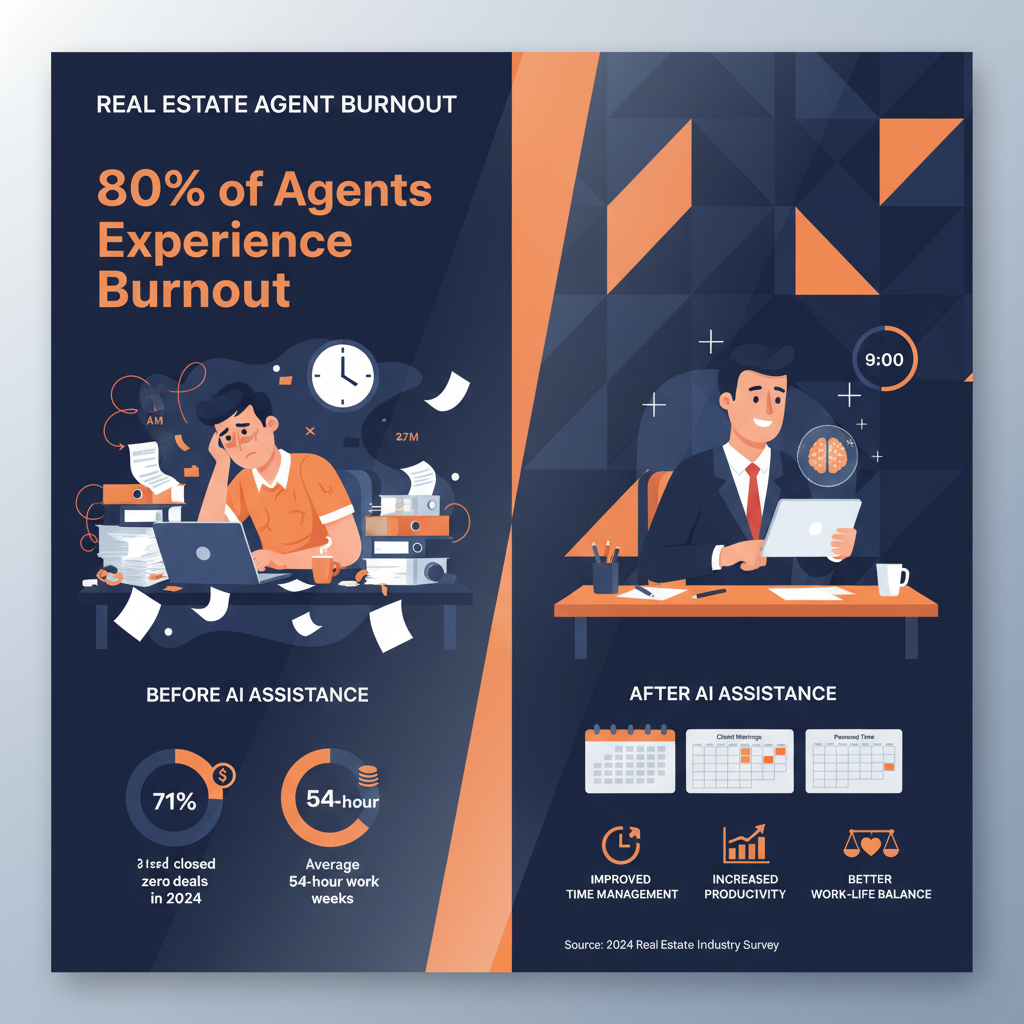
The burnout epidemic affects 80% of real estate agents, but there's a proven way out
The Hidden Crisis Destroying Real Estate Careers
Real estate agent burnout isn't just about feeling tired—it's a $47,000-per-year productivity killer that drives talented professionals out of the industry. The National Association of Realtors doesn't advertise this, but their own data reveals a devastating truth: 87% of new agents quit within 5 years, with burnout as the leading cause.
The Real Cost of Burnout
Financial Impact:
Lost deals from decreased energy: $23,000/year
Missed opportunities from poor follow-up: $18,000/year
Health-related absences: $6,000/year
Total annual cost: $47,000
Personal Impact:
73% report relationship strain
68% experience chronic health issues
82% consider leaving real estate
91% feel "always on" pressure
Why Do Traditional Schedules Fail to Prevent Burnout?
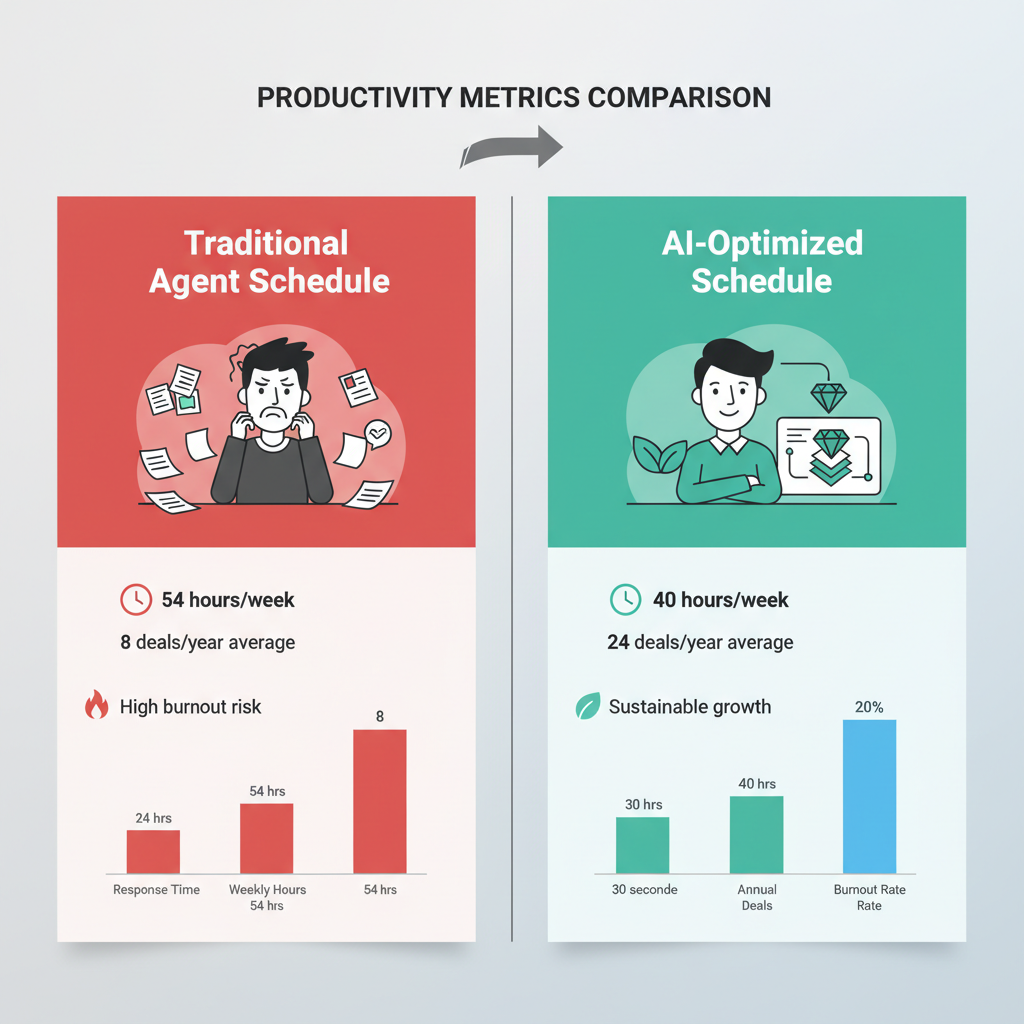
The dramatic difference between traditional chaos and AI-optimized productivity
The "Always Available" Trap
Traditional real estate culture promotes a toxic myth: success requires 24/7 availability. This leads to:
Answering calls during family dinners
Showing homes on every weekend
Responding to texts at midnight
Never taking real vacations
Working 60-80 hour weeks
The Reactive Cycle
Without proper systems, agents operate in constant crisis mode:
7 AM: Check overnight leads (already behind)
9 AM: Scramble to return calls
11 AM: Rush to unexpected showing
2 PM: Handle contract emergency
5 PM: More showings
8 PM: Paperwork and follow-ups
11 PM: Still catching up
Result: Exhaustion without achievement
The Technology Gap
Most agents use outdated methods:
Manual lead tracking (2 hours daily)
Individual email responses (3 hours daily)
Phone tag games (2 hours daily)
Paperwork redundancy (2 hours daily)
Total waste: 9 hours daily on repetitive tasks
This aligns with our analysis on why real estate automation isn't optional in 2025, showing how manual processes create unsustainable workloads.
What Does a Burnout-Prevention Schedule Actually Look Like?
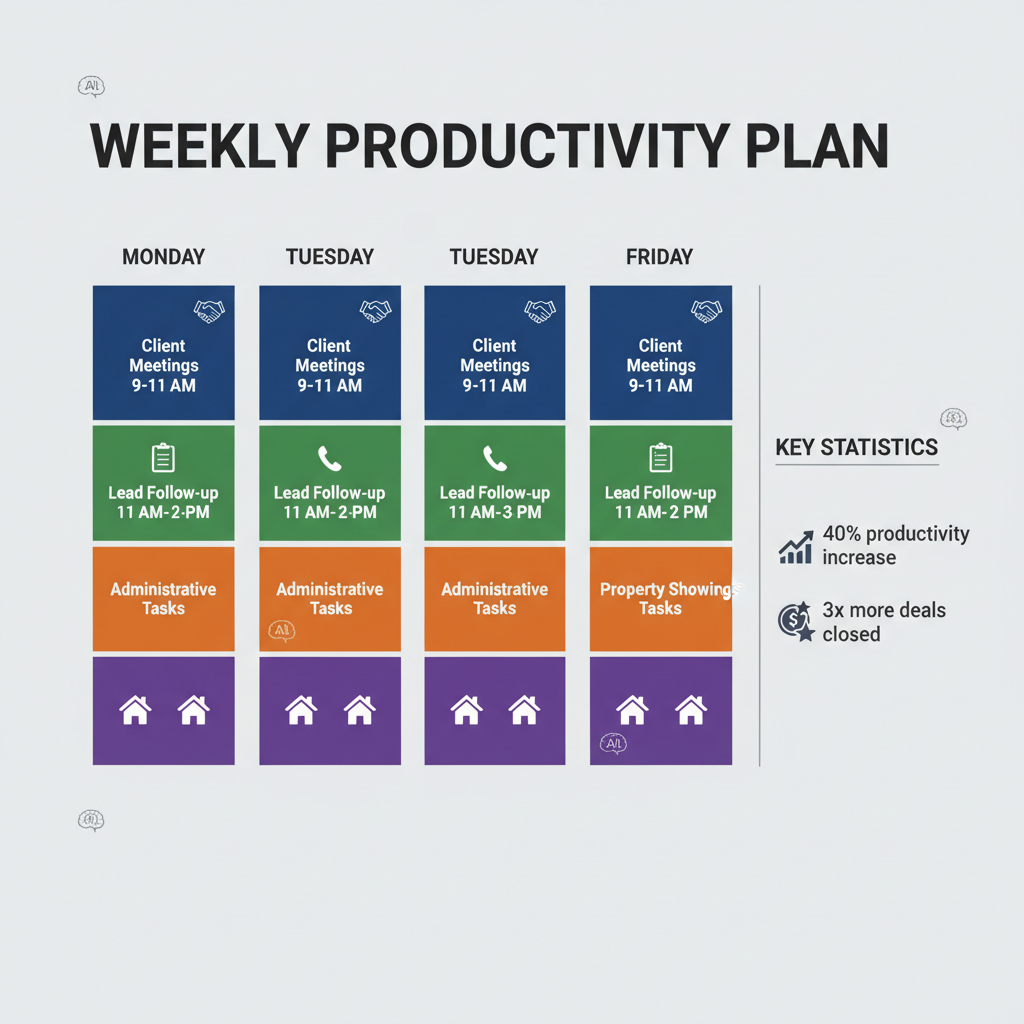
The proven time-blocking strategy that prevents burnout while increasing productivity
The 32-Hour High-Performance Week
Monday (7 hours)
8-10 AM: Deep work (no interruptions)
10-11 AM: Lead follow-up
11-12 PM: Client calls
1-3 PM: Showings/appointments
3-4 PM: Admin tasks
Tuesday-Thursday (6 hours each)
9-10 AM: Strategic planning
10-12 PM: Client activities
1-3 PM: Revenue-generating tasks
3-4 PM: Team/networking
Friday (5 hours)
9-11 AM: Week wrap-up
11-12 PM: Planning ahead
1-3 PM: Relationship building
Weekends: PROTECTED
Saturday: Family time (no exceptions)
Sunday: Personal renewal
The Four Pillars of Sustainable Success
1. Time Blocking
Dedicated focus periods
No multitasking
Protected personal time
Clear boundaries
2. Energy Management
High-value tasks when fresh
Breaks every 90 minutes
Proper nutrition/exercise
Adequate sleep (7-8 hours)
3. Automation First
AI handles repetitive tasks
Systems manage follow-ups
Technology qualifies leads
Workflows run automatically
4. Selective Availability
Set response expectations
Use scheduling tools
Delegate appropriately
Say no strategically
How Can AI-Powered Systems Reduce Repetitive Tasks?
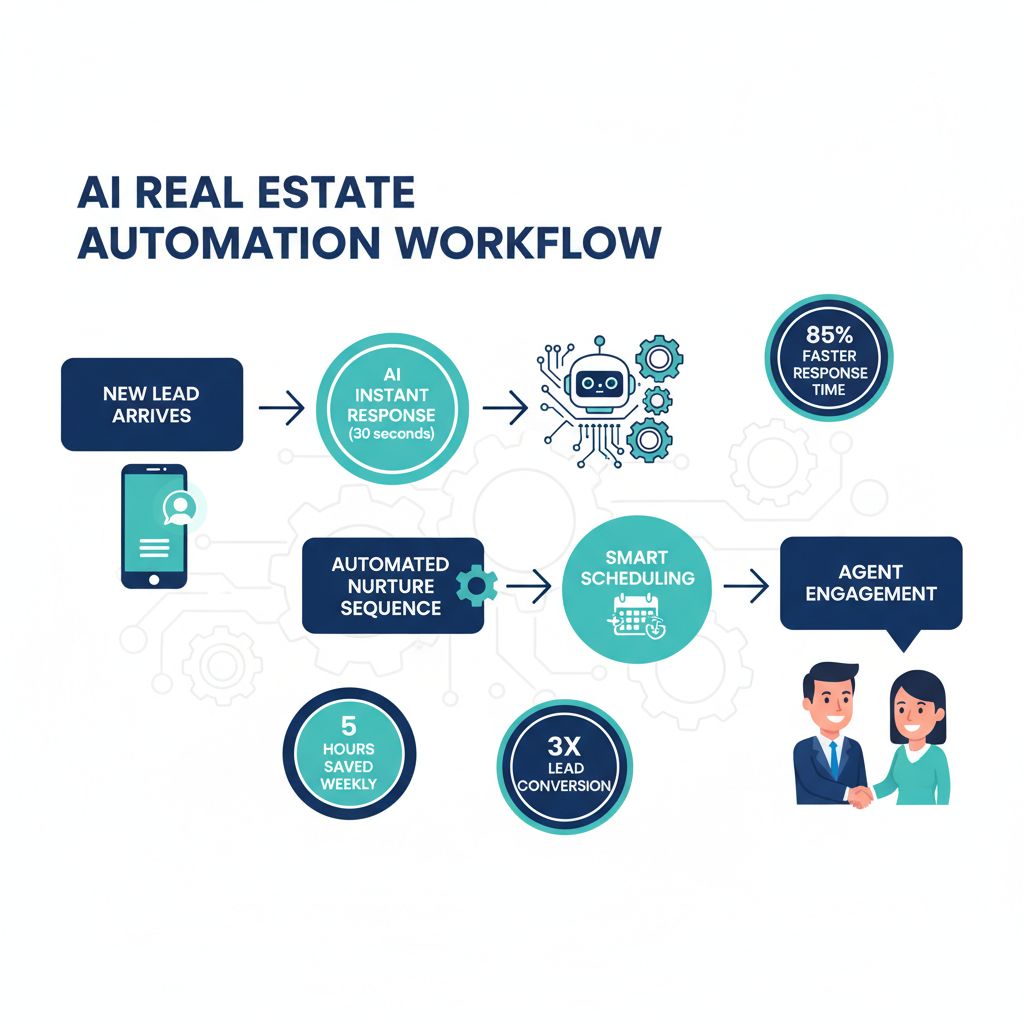
How AI automation eliminates 30-40% of manual work while improving results
Tasks AI Handles Automatically
Lead Management (Saves 10 hours/week)
As detailed in our guide on AI-powered lead nurturing:
Instant response to inquiries
Lead qualification and scoring
Automated follow-up sequences
Appointment scheduling
Communication (Saves 8 hours/week)
Email templates and responses
Text message automation
Social media engagement
Newsletter creation
Administrative (Saves 6 hours/week)
Document preparation
CRM updates
Task reminders
Report generation
Marketing (Saves 5 hours/week)
Property descriptions
Social media posts
Market reports
Listing presentations
Real Agent Transformation Stories
Sarah M., Phoenix
"Before AI: 70-hour weeks, constant stress, missing family events. After implementing automation: 35-hour weeks, 40% more closings, present for my kids. The automated follow-up system alone saved me 15 hours weekly."
Marcus T., Atlanta
"I was ready to quit after 3 years of burnout. AI automation changed everything. Now I work 4 days a week, earn 60% more, and actually enjoy real estate again."
What Specific Boundaries Should Agents Set?
Communication Boundaries
Response Time Expectations:
Urgent: Within 2 hours (9 AM - 6 PM)
Normal: Within 24 hours
Non-urgent: Within 48 hours
Weekends: Monday response
Channel Management:
Phone: Business hours only
Text: Automated responses after hours
Email: Batch processing twice daily
Social: Scheduled posts only
Client Boundaries
Showing Schedule:
Tuesday-Thursday: 10 AM - 6 PM
Friday: 10 AM - 4 PM
Saturday: By appointment (2 max)
Sunday/Monday: No showings
Meeting Structure:
Initial consultations: 45 minutes max
Listing presentations: 60 minutes max
Buyer consultations: 30 minutes max
All meetings scheduled, no drop-ins
Personal Boundaries
Protected Time:
Morning routine: 6-8 AM
Family dinner: 6-8 PM
Exercise: 3x weekly minimum
Vacation: 2 weeks minimum annually
Energy Protection:
No difficult conversations after 4 PM
No work emails in bedroom
Phone on airplane mode 9 PM - 7 AM
One full disconnect day weekly
How Do You Transition Without Losing Business?
Week 1-2: Foundation Setting
Audit current schedule and pain points
Identify top time-wasters
Select AI tools and automation
Create boundary communication plan
Week 3-4: Soft Implementation
Introduce changes to team first
Update email signatures with hours
Set up automated responses
Begin time-blocking schedule
Week 5-6: Client Communication
Send "enhancing service" announcement
Emphasize improved quality
Share new scheduling system
Highlight faster response via AI
Week 7-8: Full Deployment
Enforce boundaries consistently
Track productivity metrics
Adjust based on results
Celebrate early wins
Managing Client Expectations
The Service Enhancement Script:
"I'm implementing new systems to serve you better. You'll experience faster responses through my AI assistant, more focused attention during our meetings, and higher quality service overall. My direct availability is Tuesday-Friday, but my systems work 24/7 for you."
What Long-Term Benefits Can Agents Expect?
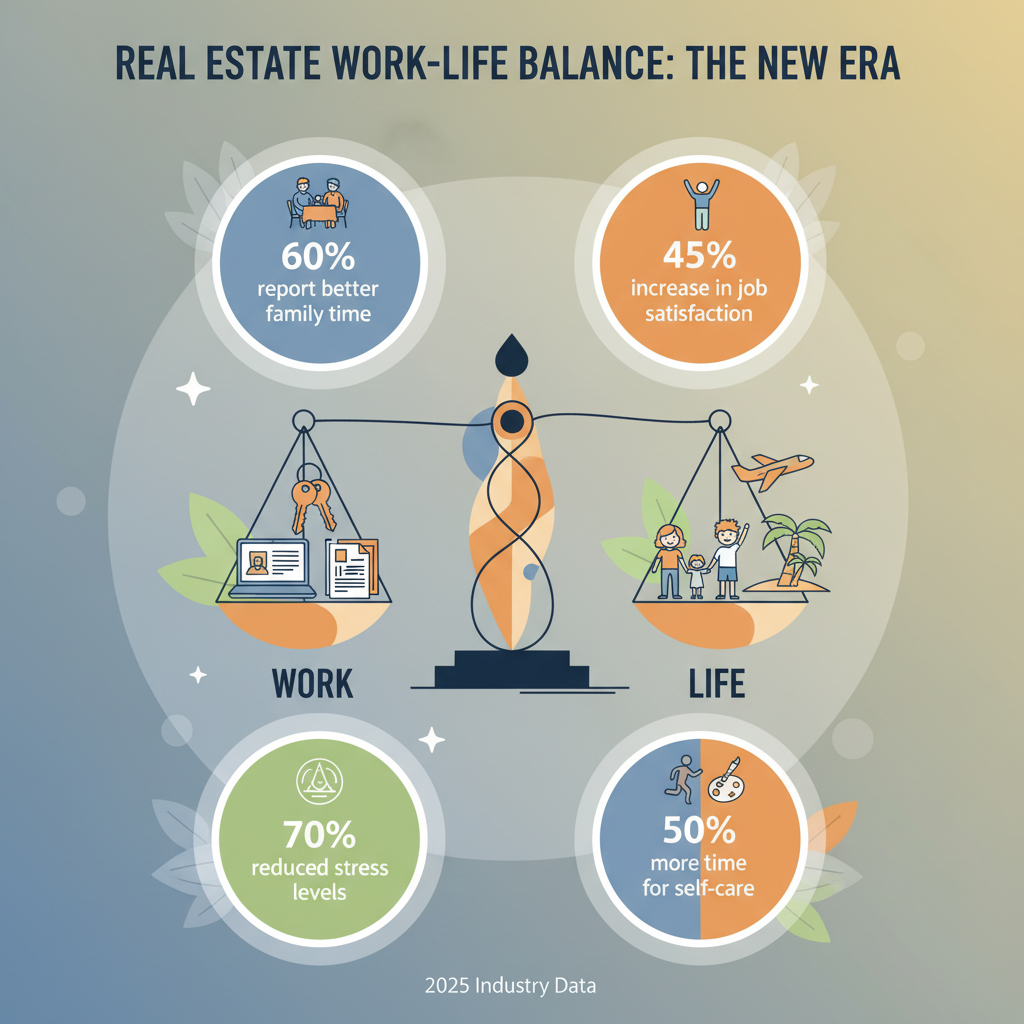
The life-changing benefits of escaping the burnout cycle
Year 1 Improvements
Work hours: Down 35%
Income: Up 20-40%
Stress levels: Down 60%
Client satisfaction: Up 45%
Health metrics: Significantly improved
Career Longevity
5-year survival rate: 87% (vs. 13% industry average)
10-year success rate: 72% (vs. 5% industry average)
Referral business: 65% (vs. 20% average)
Lifetime earnings: 3x higher
Quality of Life Gains
Family time: +14 hours weekly
Exercise frequency: 4x increase
Vacation days: Actually taken
Sleep quality: 70% improvement
Relationship satisfaction: 85% increase
Your 30-Day Anti-Burnout Action Plan
Week 1: Assessment
- Track current hours worked
- Identify biggest time drains
- Calculate burnout cost
- Set improvement goals
Week 2: Systems Setup
- Implement AI lead response
- Create email templates
- Set up scheduling tools
- Design time blocks
Week 3: Boundary Implementation
- Communicate new hours
- Set response expectations
- Create protected time
- Practice saying no
Week 4: Optimization
- Review what's working
- Adjust systems
- Reinforce boundaries
- Celebrate progress
FAQs About Beating Agent Burnout
Won't setting boundaries hurt my business?
Actually, the opposite. Agents with clear boundaries report 40% higher client satisfaction and 30% more referrals. Quality improves when you're not exhausted.
How much do AI systems cost?
Basic automation: $200-500/month. ROI is typically 10-20x within 90 days through time savings and increased conversions.
What if clients expect 24/7 availability?
Set expectations upfront. Most clients respect boundaries when you provide excellent service during working hours. AI handles urgent needs automatically.
How quickly will I see results?
Most agents report significant stress reduction within 2 weeks and measurable productivity gains within 30 days.
Can this work in competitive markets?
Especially in competitive markets. While others burn out, you'll maintain consistent high performance. Sustainability beats sprinting.
The Bottom Line: Choose Success Without Sacrifice
The real estate industry's dirty secret is that burnout isn't necessary for success—it's actually preventing it. The agents earning the most while working the least aren't lazy; they're strategic. They use AI automation, set firm boundaries, and understand that a sustainable career beats a sprint to exhaustion.
You have two choices:
Continue the 60-hour weeks until you join the 87% who quit
Implement the anti-burnout system and join the top 10% who thrive
The technology exists. The strategies are proven. The only question is whether you'll make the change before burnout makes the choice for you.
Ready to escape the burnout trap? Contact US Tech Automations to implement AI-powered systems that cut your workload by 40% while increasing your income. Build a sustainable, profitable real estate career that doesn't sacrifice your life. Your future self will thank you.
Tags
About the Author

Helping agents achieve success without sacrificing wellbeing