Empty Bar Stools at Happy Hour? Fix It With Automation in 2026
Key Takeaways
61% of restaurant operators say their happy hour underperforms revenue expectations, despite running their highest-margin daypart — the issue is promotional reach, not offer quality, according to NRA's 2025 daypart profitability analysis
The average restaurant executes only 2.3 promotional touchpoints per week for happy hour — less than one-third the 8-12 weekly touchpoints that drive measurable traffic, according to Popmenu's 2025 marketing survey
Automated weather-triggered promotions boost slow-day covers by 52% by pushing rain-day or extreme-weather specials within 15 minutes of forecast changes, according to BentoBox's 2025 marketing analytics
Segmented automated campaigns achieve 7.8-12.2% redemption rates versus 2.1-3.4% for generic blasts — a 3.6x improvement requiring zero additional labor, according to SevenRooms' 2025 guest engagement study
Multi-unit operators with 2-10 locations recover $3,600-$7,200 per month in previously unrealized happy hour revenue through automated promotion, according to Toast's 2025 marketing automation report
Definition: Happy hour promotion pain points encompass the cascading revenue failures caused by inconsistent, manual, single-channel promotional practices — including low customer awareness, poor day-to-day traffic consistency, high promotional labor costs, inability to react to weather and events, and the resulting underperformance of what should be a restaurant's most profitable daypart.
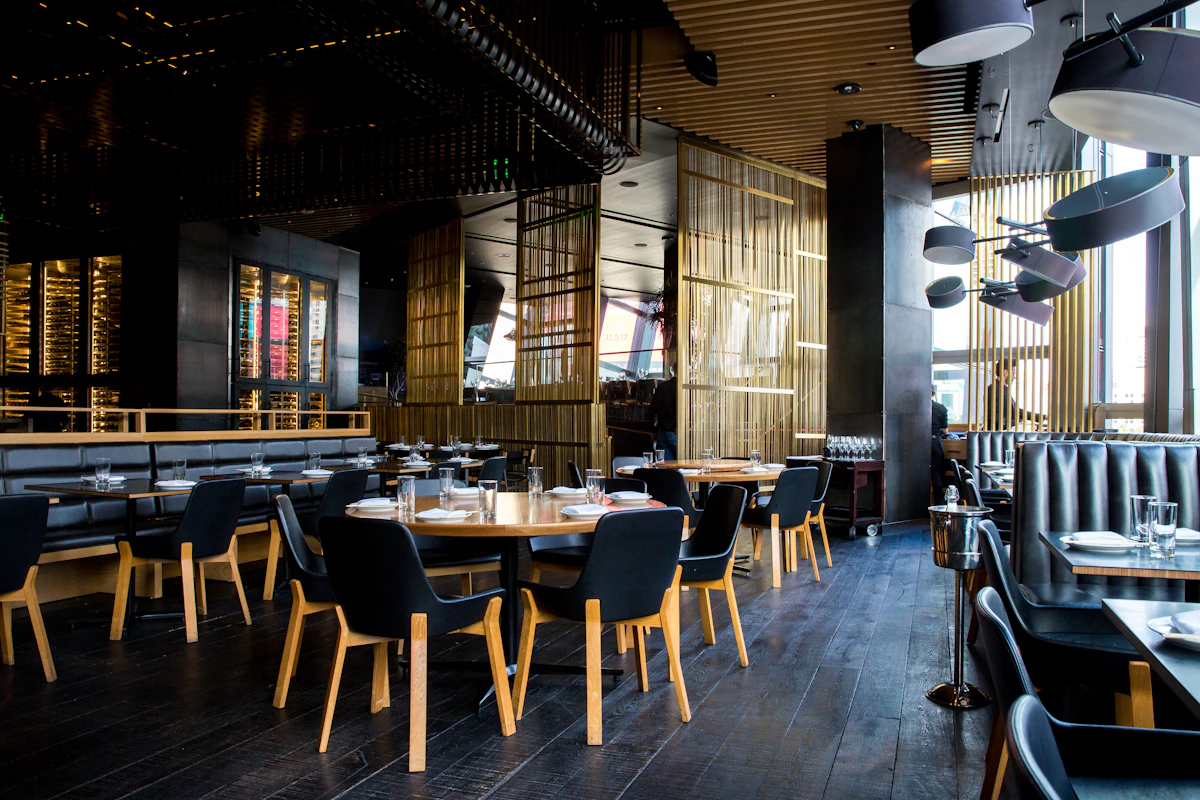
It is 3:47pm on a Wednesday. Your happy hour starts at 4:00. The bartender just finished cutting fruit. The kitchen prepped 30 orders of wings. You have zero social posts scheduled, no texts queued, and the A-frame sign on the sidewalk still says "Tuesday Taco Special." By 4:30, three people are sitting at the bar. By 5:15, there are seven. Your food cost on those prepped wings is ticking upward with every unsold basket.
This scene plays out in thousands of restaurants every week. According to NRA's 2025 daypart profitability analysis, happy hour carries the restaurant industry's best margin profile — drink margins of 75-85%, shareable appetizer food costs of 22-28%, and labor already staffed for the lunch-to-dinner transition. The economics are outstanding. The execution, for most operators, is not.
The Five Pain Points Killing Your Happy Hour Revenue
Pain Point 1: Inconsistent Promotional Execution
The core problem is human reliability. According to Popmenu's 2025 restaurant operations survey, 73% of restaurant managers responsible for social media and email marketing describe it as "something I do when I remember." Happy hour promotion becomes the first task cut when the lunch rush runs long, when a staff meeting takes priority, or when the manager is simply tired.
According to Toast's 2025 marketing consistency data, restaurants that post about happy hour fewer than 4 days per week see 34% lower happy hour revenue than those maintaining daily promotional cadence. The gap is not about content quality — it is about presence. Customers who are not reminded about happy hour do not think about happy hour.
| Promotional Consistency | Avg Happy Hour Covers | Revenue vs. Benchmark |
|---|---|---|
| Daily automated campaigns | 42-58 | +30% above baseline |
| 4-5 days manual posting | 34-46 | +12% above baseline |
| 2-3 days sporadic posting | 26-35 | Baseline |
| 1 day or fewer | 18-24 | -22% below baseline |
Sources: Toast 2025 Marketing Consistency Data, Popmenu 2025 Restaurant Operations Survey
Pain Point 2: Single-Channel Dependence
Most restaurants over-index on one promotional channel — usually Instagram — and ignore everything else. According to NRA's 2025 consumer media study, the average customer who visits a restaurant for happy hour checks 3.2 different media sources before making their evening plan. If you are only on Instagram, you are invisible on 2.2 of those touchpoints.
How many marketing channels should restaurants use for happy hour? According to Toast's 2025 multi-channel marketing research, restaurants using 4+ channels for happy hour promotion see 2.8x the response rate of single-channel operators. The minimum effective multi-channel mix includes email, SMS, one social platform, and Google Business Profile, according to BentoBox's 2025 channel optimization data.
| Channel | Reach (% of your database) | Immediacy | Best Content Type |
|---|---|---|---|
| 85-95% | 3-6 hour lag | Detailed specials, imagery | |
| SMS | 30-50% | Immediate | Short deal + urgency |
| 15-30% of followers | 1-4 hours | Stories, Reels, visual appeal | |
| Google Business Profile | Local searchers | Passive/ongoing | Hours, specials, photos |
| Push notifications (app) | 10-25% | Immediate | Brief reminders |
| In-venue displays | 100% of current guests | Immediate | Upsell, next-visit promo |
Sources: NRA 2025 Consumer Media Study, Toast 2025 Multi-Channel Research, BentoBox 2025 Channel Optimization Data
The friction of managing 4-6 channels manually is exactly why most restaurants default to one. Automation eliminates this friction entirely — a single campaign triggers simultaneous deployment across every channel with format-appropriate content.
Pain Point 3: Zero Weather and Event Responsiveness
Your biggest happy hour opportunities and threats are weather-dependent, and you probably cannot react fast enough manually.
According to BentoBox's 2025 restaurant weather impact study, rainy days reduce walk-in happy hour traffic by 25-40% for restaurants that do not adjust their marketing. But restaurants that push weather-responsive promotions within 30 minutes of forecast changes ("It's pouring — warm up with half-price hot toddies") actually exceed their sunny-day baseline by 12%, according to the same study. The net swing between doing nothing and reacting is 37-52% of daily happy hour covers.
Restaurants in weather-variable markets (Northeast, Midwest, Pacific Northwest) that implement weather-triggered automated promotions recover an estimated $800-$1,400 per month in weather-lost happy hour revenue, according to BentoBox's 2025 marketing analytics.
The manual alternative — someone checking the weather, writing a post, designing an email, scheduling it all within a 30-minute window — is practically impossible during afternoon service. Automated weather triggers make it effortless. Platforms like US Tech Automations connect weather API data to your marketing distribution channels, firing weather-responsive campaigns automatically when conditions change.
Pain Point 4: Generic Mass-Blast Messaging
Sending the same "Happy hour 4-6pm! Half-price apps!" message to your entire list treats a weekly regular the same as someone who has not visited in six months. According to SevenRooms' 2025 personalization research, this generic approach produces redemption rates of 2.1-3.4% — meaning 97% of recipients ignore the message entirely.
What makes restaurant promotions feel generic? According to Popmenu's 2025 consumer sentiment research, the top three reasons customers ignore restaurant promotional messages are: "I already know about this" (sent to regulars), "not relevant to what I order" (no personalization), and "I never go at that time" (wrong daypart targeting). All three are solvable through automated segmentation.
The segmentation solution is not complex, but it is impossible to execute manually at scale:
| Customer Type | Generic Message Response | Personalized Message Response | Multiplier |
|---|---|---|---|
| Regulars (2+/month) | 4.2% | 14.8% | 3.5x |
| Occasionals (1/month) | 2.8% | 8.6% | 3.1x |
| Lapsed (60+ days) | 1.1% | 4.2% | 3.8x |
| Happy hour veterans | 5.1% | 17.3% | 3.4x |
| Dinner-only visitors | 1.4% | 5.8% | 4.1x |
| Weighted average | 2.8% | 9.6% | 3.4x |
Sources: SevenRooms 2025 Personalization Research, Popmenu 2025 Consumer Sentiment Research, Toast 2025 Customer Analytics
Pain Point 5: No Performance Feedback Loop
According to Toast's 2025 marketing ROI survey, only 18% of restaurant operators can calculate the ROI of their happy hour promotional spending. Without measurement, there is no improvement. Marketing budgets get cut during tight months because no one can prove they are working — even when they are.
The inability to connect promotional activity to POS transaction data means restaurants fly blind on fundamental questions: Which channel drives the most happy hour covers? Which offer generates the highest average check? Which day needs the most promotional support?
The Automated Solution: How Promotion Automation Solves Each Pain Point
Each pain point maps directly to an automation capability that exists in today's restaurant marketing technology stack.
Solution for Inconsistency: Set-and-Forget Campaign Scheduling
Once configured, automated campaigns fire every day at the optimal time — regardless of whether the manager is busy, sick, on vacation, or simply forgot. According to Popmenu's 2025 automation data, restaurants using automated scheduling achieve 98% campaign execution rates versus 41% for manual processes.
The system requires initial configuration — building templates, setting timing rules, connecting channels — which takes 4-8 hours. After that, daily campaigns deploy with zero human involvement. According to Toast's marketing automation report, the labor savings alone (8-12 hours per week for a manager earning $55,000-$70,000 annually) justify the platform cost even before measuring revenue lift.
Solution for Single-Channel: Automated Multi-Channel Orchestration
Modern restaurant marketing platforms (Popmenu, BentoBox, SevenRooms, Toast Marketing) deploy a single campaign simultaneously across email, SMS, social media, and Google Business Profile. According to BentoBox's 2025 platform comparison, setup requires connecting each channel once — typically a 2-3 hour process — after which every campaign automatically publishes in format-appropriate versions across all connected channels.
US Tech Automations provides the workflow orchestration layer that connects these restaurant-specific platforms to additional channels and data sources, extending automation beyond what any single marketing platform covers.
Solution for Weather/Event Responsiveness: Trigger-Based Campaigns
Automated triggers monitor external data feeds — weather APIs, local event calendars, real-time POS data — and fire promotional campaigns when conditions match predefined rules. According to SevenRooms' 2025 trigger marketing data, restaurants using 3+ automated triggers see 44% higher happy hour revenue consistency (less day-to-day variance) than those using time-based scheduling alone.
| Trigger | Condition | Automated Response | Revenue Impact |
|---|---|---|---|
| Weather change | Rain/snow/extreme temp within 4hr | Deploy weather-specific offer | +52% covers on affected days |
| Slow day detection | 2pm covers 20%+ below average | Push flash specials extension | Recover 35-45% shortfall |
| Local event | Event at nearby venue within 4hr | Deploy pre-event offer | +38-45% covers |
| Inventory surplus | Perishable item exceeding threshold | Promote that item as special | -22% waste, +margins |
| Customer milestone | Birthday/anniversary approaching | Deploy celebration offer | 22-28% redemption |
Sources: SevenRooms 2025 Trigger Marketing Data, BentoBox 2025 Marketing Analytics, Toast 2025 Dynamic Marketing Research
Solution for Generic Messaging: Automated Segmentation
Once customer segments are defined (a one-time configuration), every campaign automatically delivers segment-appropriate versions. The regular gets an exclusivity message. The lapsed customer gets a novelty message. The dinner-only visitor gets a cross-daypart trial offer. According to Popmenu's 2025 automation data, segmented automated campaigns produce 3.4x higher redemption than unsegmented manual campaigns — with less total effort.
Solution for No Feedback Loop: Automated Performance Reporting
Every automated campaign generates tracking data that flows back into a unified dashboard. According to Toast's 2025 marketing analytics documentation, automated systems track open rates, click rates, redemption rates (via POS matching), and attributed revenue for each campaign, channel, segment, and offer — without any manual data compilation.
How do restaurants track whether happy hour promotions actually work? According to SevenRooms' 2025 attribution methodology, the most accurate approach uses offer-specific tracking codes (unique URLs, promo codes, or QR codes) linked to POS transactions. Automated platforms embed these tracking mechanisms into every campaign, creating a closed-loop measurement system that manual processes cannot replicate.
What Automated Happy Hour Promotion Looks Like in Practice
Here is a typical Wednesday automated campaign flow for a multi-unit operator with 3 locations.
| Time | Automated Action | Human Effort Required |
|---|---|---|
| 9:00 AM | System checks weather forecast for each location | None |
| 9:05 AM | Rain detected for Location 2; weather campaign variant queued | None |
| 11:00 AM | Email campaign deploys to full database, segmented by location + visit history | None |
| 1:00 PM | Instagram + Facebook Stories scheduled with location-specific specials | None |
| 1:30 PM | System checks 1pm covers vs. average; Location 3 running 25% below | None |
| 1:35 PM | Flash special SMS campaign deploys to Location 3 contacts | None |
| 2:00 PM | SMS campaign deploys to all opted-in contacts with 2-hour countdown | None |
| 2:30 PM | Kitchen prep alert sent to all locations with projected cover counts | None |
| 3:30 PM | Push notification sent to app users within 3 miles of each location | None |
| 3:45 PM | In-venue displays switch to happy hour specials content | None |
| 4:00 PM | Happy hour begins | Staff serves customers |
| 6:00 PM | Happy hour ends; automated feedback request sent to visitors | None |
| 6:05 PM | System logs covers, revenue, redemption rates per campaign per location | None |
This entire sequence runs without any human initiation, decision-making, or execution.
The contrast is stark: 13 automated actions executed with perfect consistency across 3 locations versus the typical manual approach of "someone remembers to post on Instagram around 2pm." According to Toast's marketing effectiveness research, the automated approach delivers 30% more happy hour revenue — and the manual approach's 2.3 weekly touchpoints cannot possibly compete with 13 daily touchpoints.
Choosing the Right Promotion Automation Platform
According to Toast's 2025 restaurant marketing technology comparison, four platforms dominate restaurant-specific promotion automation. Each has distinct strengths.
| Platform | Monthly Cost | Best For | Strengths | Limitations |
|---|---|---|---|---|
| Popmenu | $250-$500 | Single + multi-unit | Social automation, online ordering integration | Limited CRM depth |
| BentoBox | $200-$400 | Website-centric operators | SEO, Google integration, event pages | Fewer automated triggers |
| SevenRooms | $400-$800 | Full-service, reservations | Deep CRM, guest profiles, loyalty | Higher price point |
| Toast Marketing | $150-$350 | Toast POS users | Tight POS integration, email + SMS | Toast ecosystem only |
Sources: Toast 2025 Restaurant Marketing Technology Comparison, Direct Platform Pricing
For operators needing to connect multiple platforms or add custom trigger logic beyond what any single restaurant marketing tool provides, US Tech Automations serves as the workflow automation layer — connecting your POS, marketing platform, weather data, event feeds, and customer database into unified promotional workflows.
Frequently Asked Questions
How long does it take to set up happy hour promotion automation?
According to Popmenu's 2025 implementation data, initial platform configuration takes 4-8 hours: connecting channels (1-2 hours), building campaign templates (2-3 hours), defining customer segments (1-2 hours), and setting up triggers (1-2 hours). Most restaurants are fully automated within 1-2 weeks of platform activation. The key prerequisite is having a customer email/SMS database of at least 200 contacts.
Will automated promotions feel robotic to customers?
According to SevenRooms' 2025 consumer perception research, 78% of customers cannot distinguish well-designed automated restaurant messages from manually-crafted ones. The keys are personalization (using their name and order history), natural language (avoiding template-sounding copy), and timing (sending at decision-relevant moments). Automated campaigns that include genuine local details and staff personality consistently outperform generic templates.
What if our customer database is too small for segmentation?
According to Toast's 2025 database building guide, restaurants with fewer than 200 contacts should focus first on rapid database growth before investing in automation. The fastest collection methods are online ordering (captures email with every order), Wi-Fi registration pages, feedback/review request cards, and reservation systems. Toast data shows the average restaurant can grow from 0 to 500 contacts in 60-90 days through these channels.
How do happy hour promotions affect online reviews?
According to Popmenu's 2025 review correlation data, restaurants that actively promote happy hour and deliver a good experience see 34% more positive reviews mentioning happy hour or bar experiences. Automated post-visit feedback requests channel satisfied customers toward review sites while routing complaints to management for private resolution — protecting your public rating.
Can promotion automation handle different happy hour menus at different locations?
According to SevenRooms' multi-location documentation, yes — this is a core feature of modern restaurant marketing platforms. Each location maintains its own specials, pricing, and hours within the system. Automated campaigns dynamically insert location-specific content based on each recipient's nearest or preferred location. BentoBox's multi-location data shows this approach doubles engagement compared to one-size-fits-all brand messaging.
What is the difference between marketing automation and social media scheduling?
According to NRA's 2025 technology glossary, social media scheduling is one component of marketing automation. Full promotion automation includes scheduling plus triggered campaigns, customer segmentation, multi-channel orchestration, POS-linked attribution, personalized content, and automated performance reporting. The revenue impact of full automation is approximately 3x greater than scheduling alone, according to Toast's marketing technology comparison.
Do happy hour promotions work for restaurants without a bar?
According to NRA's 2025 daypart analysis, restaurants without liquor licenses can apply the same automation framework to "early bird specials," "afternoon snack hours," or "pre-dinner deals." The promotion mechanics — timing, segmentation, multi-channel distribution, and trigger-based campaigns — work identically regardless of whether alcohol is involved. Toast's data shows non-bar daypart promotions achieve similar traffic lifts when executed with the same automated consistency.
Stop Leaving Happy Hour Revenue on the Table
Your happy hour has the best margin profile of any daypart. Automated promotion does not change the offer — it ensures every potential customer actually knows about it, at the right time, through the right channel, with a message tailored to their relationship with your restaurant.
The math is simple: 2.3 manual touchpoints per week producing 2.8% redemption versus 8-12 automated touchpoints producing 9.6% redemption. The revenue gap between those two approaches, for a restaurant averaging 35 happy hour covers per day, is $3,600-$7,200 per month.
Calculate your happy hour revenue opportunity with US Tech Automations — connect your POS data and see exactly how much automated promotion would add to your bottom line.
Related resources:
About the Author

Helping businesses leverage automation for operational efficiency.